
Omega-3 in Pregnancy for Brain Health & Preterm Birth
Preterm birth is associated with an increased risk for:
- depression & other psychiatric disorders
- developmental conditions e.g. ADHD
- cognitive impairment
- breathing problems
- feeding difficulties
- cerebral palsy
- vision problems
- hearing problems
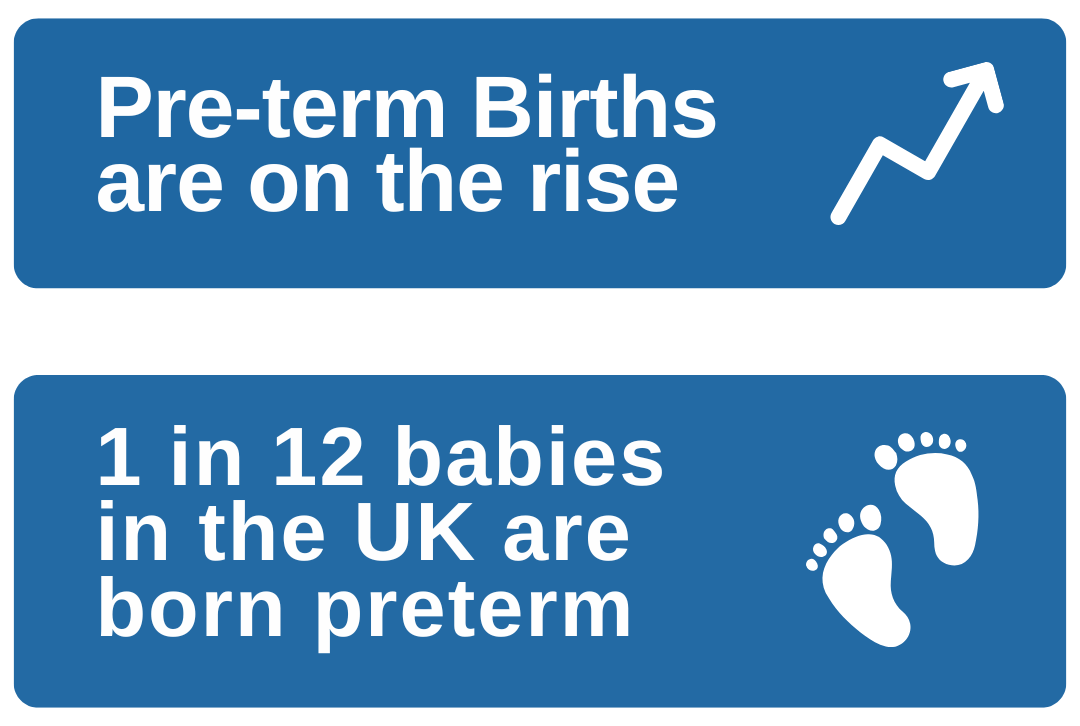
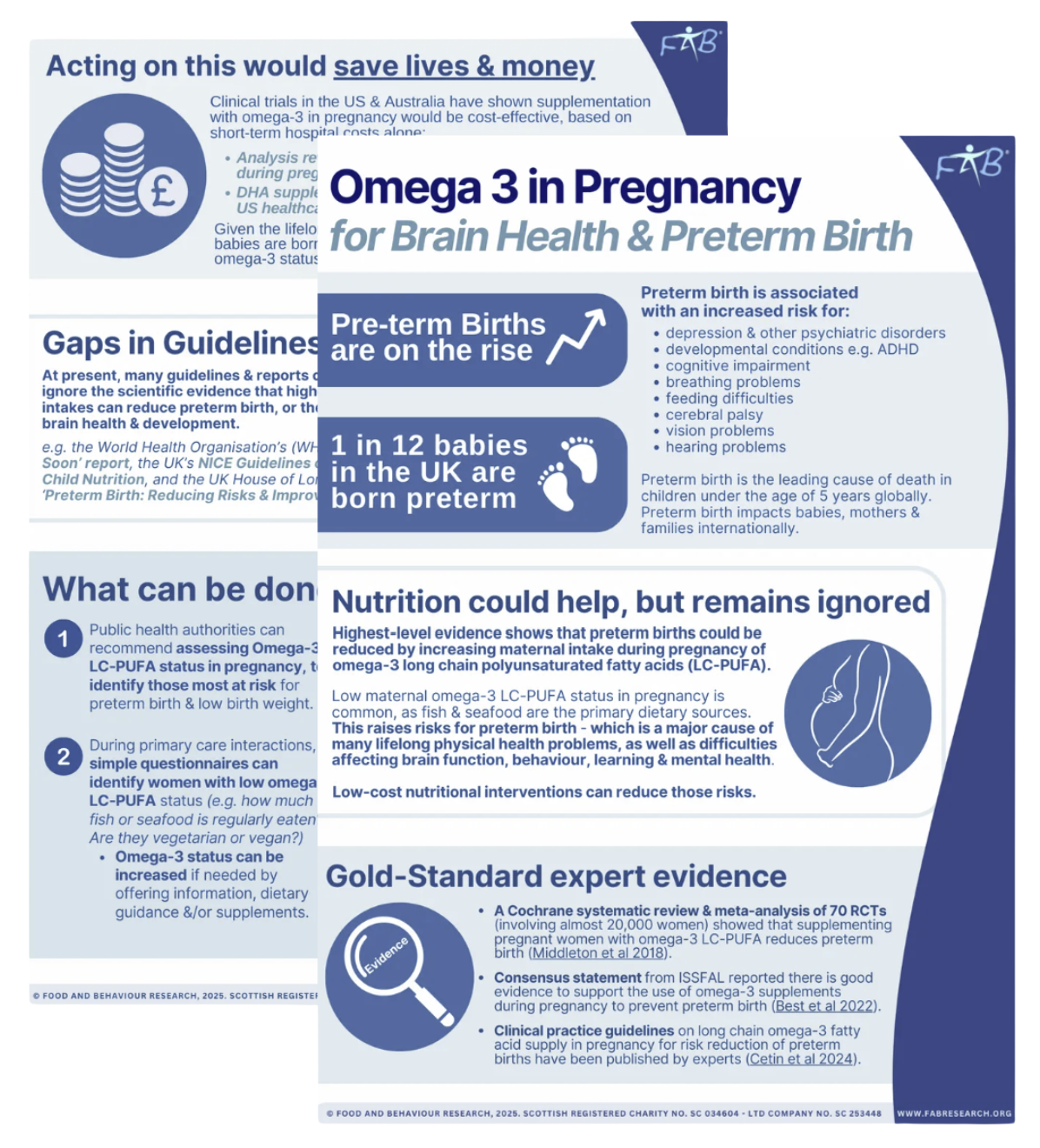
Preterm birth is the leading cause of death in children under the age of 5 years globally. Preterm birth impacts babies, mothers & families internationally

Nutrition could help, but remains ignored
Highest-level evidence shows that preterm births could be reduced by increasing maternal intake during pregnancy of omega-3 long chain polyunsaturated fatty acids (LC-PUFA).
Low maternal omega-3 LC-PUFA status in pregnancy is common, as fish & seafood are the primary dietary sources.
This raises risks for preterm birth - which is a major cause of many lifelong physical health problems, as well as difficulties affecting brain function, behaviour, learning & mental health.
Low-cost nutritional interventions can reduce those risks.
Gaps in Guidelines & Reports
At present, many guidelines & reports continue to ignore the scientific evidence that higher Omega-3 intakes can reduce preterm birth, and their vital role in brain health & development.
e.g. the World Health Organisation’s (WHO) ‘Born Too Soon’ report, the UK’s NICE Guidelines on Maternal & Child Nutrition, and the UK House of Lords expert report ‘Preterm Birth: Reducing Risks & Improving Lives’.

Gold-Standard expert evidence
- A Cochrane systematic review & meta-analysis of 70 RCTs (involving almost 20,000 women) showed that supplementing pregnant women with omega-3 LC-PUFA reduces preterm birth (Middleton et al 2018).
- Consensus statement from ISSFAL reports there is good evidence to support the use of omega-3 supplements during pregnancy to prevent preterm birth (Best et al 2022).
- Clinical practice guidelines on long chain omega-3 fatty acid supply in pregnancy for risk reduction of preterm births have been published by experts (Cetin et al 2024).

Enjoying this article?
Get an expanded, downloadable version to your inbox when you sign up.
Save lives and money
Clinical trials in the US & Australia have shown supplementation with omega-3 in pregnancy would be cost-effective, based on short-term hospital costs alone:
Given the lifelong costs of many conditions that can arise when babies are born preterm, the cumulative benefits of optimising omega-3 status in pregnancy would be immense.

Maternal health and nutrition — starting even before conception — is key in shaping the health and wellbeing of every child, for life.
Here, Professor Michael Crawford explains why the “Saving Babies” approach - adopted by Health organisations and charities worldwide – it misses the critical time window in which the brain and nervous system are actually being built - which is when dietary and other health interventions and support would have the most benefit.
Nutrition is important at ANY and EVERY age - as it is absolutely fundamental to both mental and physical health and wellbeing. But good prenatal nutrition - which includes the mother's diet even before pregnancy, really is crucial to giving any child the best possible start in life.
Continuing to neglect the nutrition and wellbeing of mothers-to-be, and focusing only on ‘saving babies’ is like 'closing the stable door after the horse has bolted.'
The "voice of the mother" is the one that needs to be heard, and represented – and if we want to save more babies and children from early death or lifelong disabilities, the nutrition of mothers-to-be needs to be given a much higher profile and priority.
Polyunsaturated Fatty Acids in Brain Development and the Preterm PUFA Gap
Omega-3 and omega-6 fatty acids are both essential for building and maintaining a healthy brain and nervous system, but insufficient intakes and/or imbalances are common in modern diets.
Leading nutritional neuroscientist Dr Simon Dyall explains how the long-chain forms of omega-3 found in fish and seafood (DHA and EPA), and of omega-6 (particularly arachidonic acid, found in meat, eggs and dairy products) shape brain development from the womb through early life - and the lifelong consequences of dietary deficiencies or imbalances during these critical periods.
Thank you to
The Waterloo Foundation and
The Foundation for Young People's Mental Health (YMPH) for organising and hosting this event, and for allowing us to share this recording with our Associate members, and the general public.
Were you expecting a paywall?
Food and Behaviour Research relies on donations to make articles like this one freely available.
Make a quick and easy donation of ANY AMOUNT and help support our Charity to create future articles and resources.
Looking for even more exclusive content?
Join us as a FAB Associate to access our audio-visual library and resources, and attend our live events for free.
All donations are very gratefully received
Thanks so much for your support
Contact Us
Contact Us
What can be done - starting now?
- Public health authorities can recommend assessing Omega-3 LC-PUFA status in pregnancy, to identify those most at risk for preterm birth & low birth weight.
- During primary care interactions, simple questionnaires can identify women with low omega 3 LC-PUFA status (e.g. how much fish or seafood is regularly eaten? Are they vegetarian or vegan?)
- Omega-3 status can be increased if needed by offering information, dietary guidance &/or supplements
- Clinical practice guidelines can do more to raise both public & professional awareness of the critical importance of Omega 3 LC-PUFA in supporting a healthy pregnancy.
- Recommended pregnancy supplements can be required to include adequate amounts of Omega-3 DHA (in addition to all other essential nutrients).
- Further research evidence to evaluate the impact of these measures can be gathered.

Share this article
Watch our recent FAB Live webinar and Q&A session on this topic

Read more on Pregnancy and Early Life


● It is vital during pregnancy and early life.
● Learn dietary sources, required intake, and how choline may impact conditions like ADHD, dyslexia, and autism.
